
Christmas in Provence
 What I love the most about France is the diversity that you find when you go from one region to another whether it is in cuisine, traditions, architecture or idioms; it feels almost like being in another country.
So when I’m asked if I cook ‘French’, I talk about how the cuisine from the north differs from that of the south.
I am from the Alps, but we have friends and relatives in neighbouring Provence, and my family and I love the simple and healthy ingredients that make up Provençal cooking: fresh vegetables, dried herbs, olive oil and tomatoes to name a few. Now that we live in Australia we continue to cook our favourite dishes and follow some Provençal traditions. As you will see, you don’t have to be in or from Provence to have a ‘Bon Nouvè’ (Merry Christmas in Provençal dialect).
First we prepare the crèche (nativity scene) with beautiful santons of Provence, these are small red clay figurines representing the nativity scene: the baby Jesus, the Virgin Mary, Joseph, the donkey and the ox, the Magi and the shepherds and characters representing the villagers and their traditional trades (the fisherman, the fishmonger, the water carrier, the woodcutter, the miller, the lavender gatherer, the drummer boy, etc.).
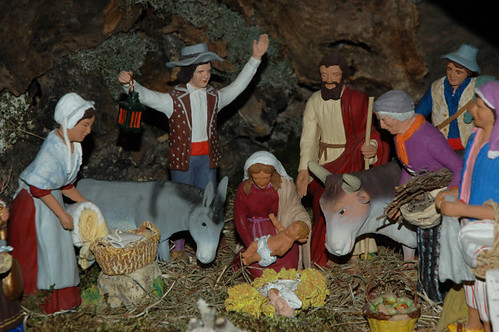
My parents and grandparents had a collection to which they added each year. We have brought some from France, but there are many places where you can order them online. Just remember that the baby Jesus should be placed in the crèche after the midnight mass.
The origins of this tradition date from the 13th century, when St. Francis of Assisi staged the nativity in his church of Greccio in Italy. The characters were then played by the villagers and the animals were real. Every town and village in Italy and then in other Catholic countries had their own nativity scene during Midnight mass at which everyone was present.
After the French Revolution, the churches were closed and the Midnight mass banned, so the figurines were created and the tradition of a nativity scene were continued in the homes of families of Provence. This tradition then spread to other regions of France.
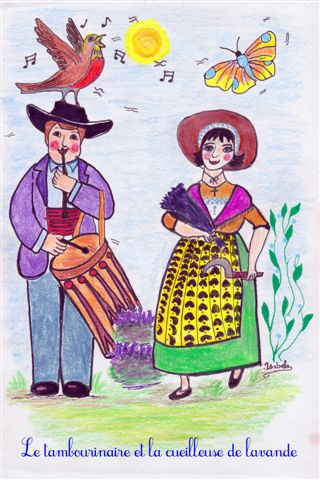
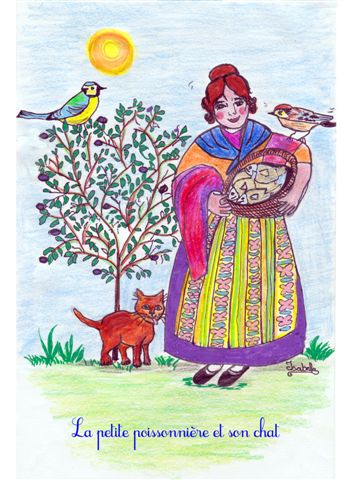
Here are some cards that my wife Isabella illustrated, inspired by santons.
Another Provençal tradition that we have continued is that of the 13 desserts which are served after midnight mass.
First, la pompe à l’huile: it is a dessert with flour, sugar, lemon zest, orange flower water and olive oil – it must be broken as Christ broke bread and not cut, otherwise you may end up bankrupt the following year!
Then the ‘four beggars’ that represent religious orders as their dark colours are like those of the robes of mendicant orders : walnuts or hazelnuts represent the order of the Augustinians, almonds the order of Carmelites, dried figs the Franciscans, and finally raisins symbolize the order of Dominicans.
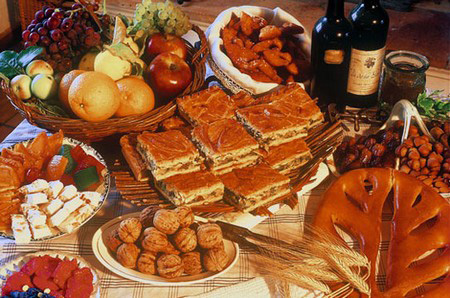
The black and white nougats are the penitents. There are also dates, figs and other dried fruits from the Far East, recalling the origin of the Magi. Then you can add seasonal fruits such as apples, pears, oranges, mandarines or quince jelly so that you have thirteen different desserts.
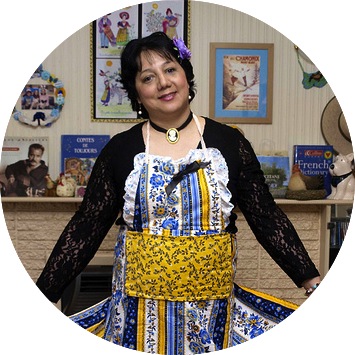
To prepare these desserts, wearing a tablier Provençal is optional but it certainly lightens up the kitchen with its bright colours. Where the traditional Provençal Christmas differs the most from other French regions is that the réveillon (long dinner eaten at Christmas eve with delicacies such as oysters and foie gras) is replaced by a more simple meal with fish and soup, although in modern times this tradition is followed less than the others.
Don’t forget that if you want to have a truly French Christmas, you have to leave your shoes under the Christmas tree, not your stockings if you want le Pére Noël to leave some gifts for you!
Thank you Pascal Inard for this informative guest post.Have you ever spent a Christmas in Provence?
Image credit1. © Pascal Inard
2. © Daniel Ferrier
3. © Illustration by Isabella Inard
4. © Illustration by Isabella Inard
5. © Véronique Pagnier
About the Contributor
Judy MacMahon






I will be leaving my shoes under the Christmas tree!
J’ai l’impression de lire une tradition venant d’un autre pays. Je suis originaire du nord-ouest de la France et ce n’est absolument pas comme ça que j’ai eu l’habitude de fêter noël! C’est vraiment intéressant de voir que dans un tout petit pays comme la France, il y a autant de différences!